
How to Keep You and Your Horse Cool in Summer
While the sunshine and warm weather are welcomed after the relentless cold and wet months, summer poses its own challenges to horses and riders alike. Keeping your horse cool can be difficult, but it is crucial to their health and well-being. Here, we are discussing how to recognise when your horse is struggling in the heat and ways to keep you and them cool, safe and hydrated so you can enjoy the sunshine.
Table of contents
What temperature is too hot for horses?
How do I tell if my horse is too hot?
How to keep horses cool in hot weather
How to stay cool while riding a horse

What temperature is too hot for horses?
Research on horses suggests that 28-30℃ is where you need to be vigilant if they are competing or being ridden. Don’t forget that humidity makes a difference. The higher the humidity, the harder it is for your horse (and you) to cool down, as sweat isn’t being evaporated as effectively.
Like humans, horses all handle heat differently. Some might be completely fine in the summer heat, while others struggle. Older or overweight horses may be less capable of regulating their body temperature.
Horse heat index
One way to determine if the temperature is risky for your horse is by using the horse heat index.
Simply add together the actual temperature in Fahrenheit and the percentage of humidity.
Temperature (F) + Humidity (%) = Horse Heat Index
| 120 or less | It’s fine to ride; continue your routine as normal. Your horse’s cooling system will be working effectively. |
| 120 – 150 | Stick to lighter work and take more frequent breaks. Your horse will sweat more, and their cooling system won’t be as effective. Take time to cool them off after riding. |
| 150 – 180 | Very light work only, ideally none. Your horse’s ability to stay cool is greatly reduced at this level, and they’re at risk of heat stress. Cool down is essential after any riding. |
| 180 or more | Avoid exercise entirely; it is too dangerous for any work in these conditions. |
How do I tell if my horse is too hot?
The best way to tell when the temperature is too hot for your horse is to learn the signs of overheating in horses.
Your horse may be struggling in the heat if you notice any of the following signs:
- Lethargic
- Fast, shallow breathing (panting)
- Fast heart rate (normal for adult horses is 28-44 beats per minute)
- Eating or drinking less
- Urinating less frequently, producing dark urine
- Poor performance when riding or reluctance to work
- Muscle spasms
Do horses sweat?
Yes! Sweating is the primary way horses cool themselves down, though it can also be a sign or stress or excitement.
If your horse is sweating excessively or sweating less than they normally do, this can be a sign that they are suffering in the heat, so it’s important to monitor their sweat levels.
Signs of heat stroke in horses
It’s essential to monitor your horse closely in hot weather, as they may be at risk of heat stroke if not kept sufficiently cool. Contact your vet immediately if your horse shows any of the following signs:
- Unsteadiness on their feet
- Flared nostrils
- Aggression
- Collapse
- Dehydration – dry, tacky gums, sunken eyes, and decreased skin elasticity
Emergency first aid for horses suffering from heat stroke
If your horse is showing signs of heat stroke, it’s important to act quickly. Call your vet immediately. Remove any tack they might be wearing and move them to a cool, shaded area. Start hosing them with cold water. If you don’t have a hose, use a large bucket. Focus especially on areas with large blood vessels, such as the neck, chest, and legs. You need to do this consistently for at least 15 minutes. Offer your horse plenty of water and electrolytes to help them rehydrate and replenish their fluids.

How to keep horses cool in hot weather
There are several ways to help your horse stay cool, comfortable, and safe when temperatures begin to soar. Here are our top tips:
Reverse turnout times
If you usually stable your horse at night and turn them out during the day, consider switching this routine to avoid the hottest temperatures. If your horse needs to go out during the day, ensure there is shade or shelter available so they can escape the sun if they choose to.
Fly prevention
Flies are a big nuisance for horses during summer. It’s important to try and take measures to fend them off so your horse can remain comfortable through the hot months. Applying fly repellent to your horse will help them enjoy their time outside without the annoyance of flies.
If your horse is out during the day, a light coloured fly rug will help keep them cool, with white being the best colour to reflect the sun’s heat. It will also reduce irritation from flies. Wetting the fly rug while it’s on the horse will improve its cooling abilities. Hosing it down a few times a day is a good idea in the hottest conditions.
When your horse is out of the stable, spray the walls with insecticide to keep stable flies from gathering and irritating your horse.
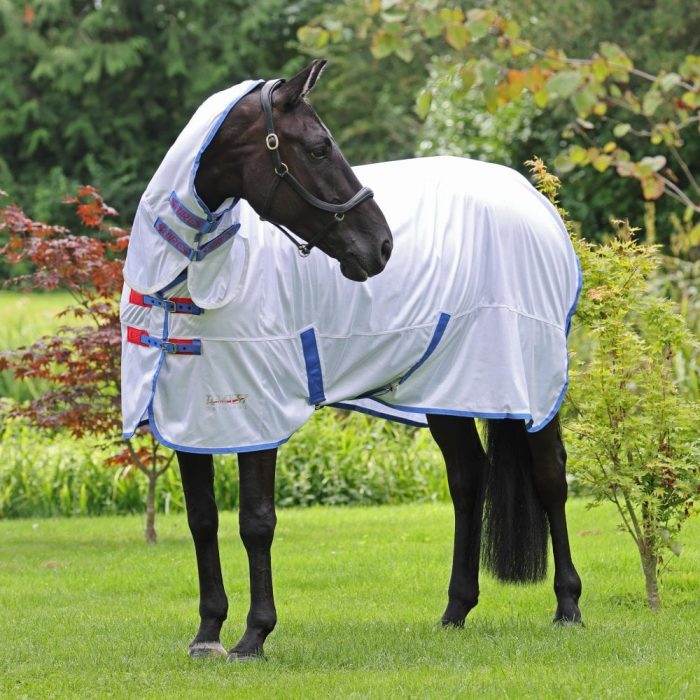
Shires Tempest Fly Rug – White
Apply suncream
If your horse has any white or pink markings on their face, it’s important to apply sun cream as they are prone to burning these areas. Horses can generally wear human sun cream, but a horse-specific one is recommended, as it has better staying power.
Stay cool during transportation
If you need to transport your horse, do it as early in the day as possible to avoid travelling in the hottest parts of the day. Open as many windows as possible to keep air flowing through the horsebox. Professional horse transporters in the UK are not allowed to move horses in temperatures over 30℃, and it’s recommended that all horse owners follow the same rule.
Keep the stable cool
Try and keep your horse’s stable as cool as possible. A stable fan can help increase airflow and have a cooling effect for your horse. Ensure it is set up out of reach of your horse.
Increase water intake
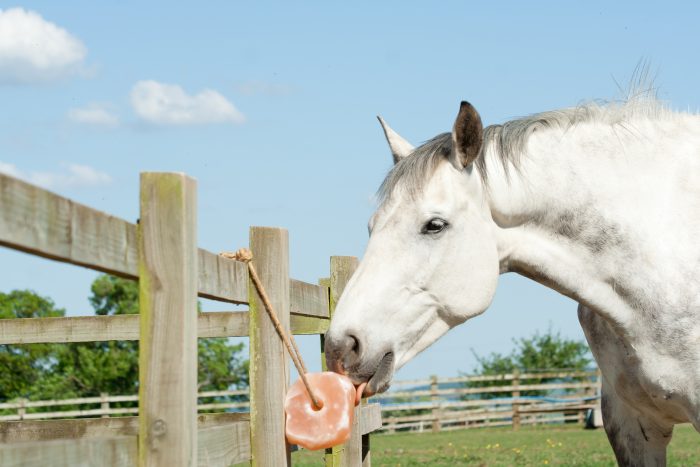
Ensure your horse has access to plenty of fresh water to stay hydrated in hot weather. The average horse drinks between 3 and 4 buckets of water a day, and this consumption increases in hot weather. Hydration is crucial to their overall well-being, including maintaining a properly functioning digestive system. Lack of water can increase the risk of impaction colic, where a firm ball of feed material blocks the intestines. A salt lick can help your horse get essential nutrients like sodium, which can be lost through excessive sweating. Salt licks contain minerals crucial to nerve function, hydration and muscle recovery. The salt also encourages your horse to drink more water.
How to stay cool while riding a horse?
We all know the importance of keeping your horse cool in summer, but don’t forget to look after yourself, too! As equestrians, we spend a significant amount of time outdoors, exposed to the elements, so it’s essential to take precautions in hot weather.
When it comes to clothing, it’s not as easy as throwing on shorts and flip-flops to beat the heat; we also have to stay safe.
Choosing what to wear for summer riding can be a challenge, but here are some key considerations to keep in mind.
Light colours: Opting for white/cream colours will help reflect heat and keep you cooler.
Lightweight materials: Many of the options in our equestrian clothing collection are made with lightweight, sweat-wicking materials to keep you cool and comfortable in the saddle.
Opt for leggings: Riding leggings or tights tend to be more lightweight than jodhpurs and breeches, with more stretch and quick-drying fabric.

Premier Equine Electra Riding Tights – White
Short boots: Opting for ankle boots instead of the full-length options will be more comfortable for riding in hot temperatures.
Choose a well-ventilated riding hat: Select a riding hat that is well-ventilated and features a peak to shield your eyes from the sun.
Choose your attire wisely to stay cool while riding. Always wear SPF when you’re out riding, completing jobs in the yard or the field – anytime you’re outside! Drink plenty of water and take some with you on rides. Try and ride in the shade if you can to keep you and your horse cooler, and keep rides short. Remember, when the weather gets really hot, you should avoid riding your horse altogether for both of your safety.
Stay cool this summer with Oakfield
Our extensive collection of equestrian products has everything you need to keep you and your horse cool throughout the summer. Whether it’s lightweight clothing, or horse care and treats to keep them going, we have plenty of options from leading brands you know and trust.
Read more
The Best Summer Riding Clothing to Keep You Cool this Season

Comments are closed here.