
What are Fly Masks for Horses
At Oakfield Saddlery, we often hear from concerned walkers or new owners who worry that a horse in a fly mask is essentially being blindfolded. It’s a natural reaction: after all, to human eyes, some of these masks look like solid fabric!
The truth is much more “eye-opening.” Since we’ve been supporting the equestrian community since 1988, we’ve seen fly mask technology evolve from simple fringes to high-tech, UV-blocking gear. Here is everything you need to know about how horses see through their masks and why they are a summer staple.
TL;DR
- Vision: Horses see through fly masks as we see through window screens; it’s a shaded, filtered view that their brain quickly adapts to.
- Safety: They are essential for blocking 70-90% of UV rays and preventing fly-borne infections.
- Usage: Use them during the day, remove them at night, and only use specialised “riding masks” when in the saddle.
- Care: Keep the mesh clean to ensure your horse’s view remains unobstructed.
Content
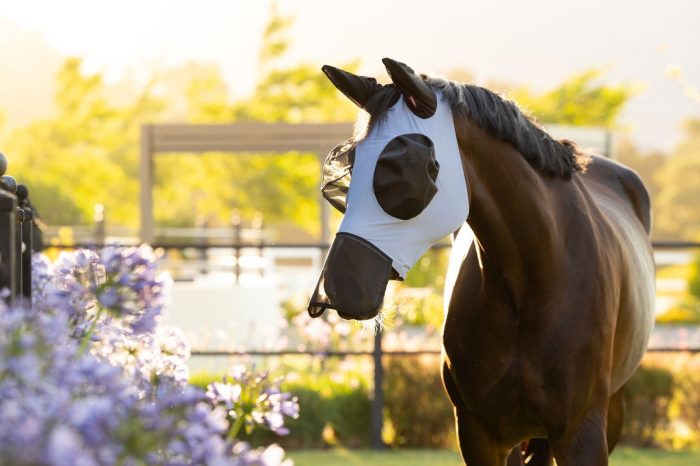
How Do Horses See Through Fly Masks?
The short answer: It is like looking through a window screen or a pair of sunglasses.
Fly masks are constructed from a specialised, fine-weave mesh. When the mask is fitted correctly, the mesh sits several inches away from the horse’s eyes. Because the horse’s eyes focus on the distance rather than the objects right in front of them, the brain ignores the fine lines of the mesh.
The “Sunglasses” Effect
Just as we find it easier to see in bright glare with sunglasses, many horses actually see better in a mask during the height of summer.
- Contrast: Darker mesh colours (like black or charcoal) are often preferred because they absorb light rather than reflecting it into the horse’s eyes.
- Clarity: Quality brands like Shires and LeMieux use fine mesh, which provides a clearer view while keeping even the smallest midges out.
Why Use a Fly Mask? (Beyond Just Flies)
While “fly” is in the name, these masks are multi-purpose tools for equine health:
- Disease Prevention: Flies are more than just a nuisance; they carry bacteria that cause “pink eye” (conjunctivitis) and other painful infections.
- UV Protection: Did you know horses can get sunburned? High-quality masks block between 70% and 90% of UV rays, which is vital for horses with pink skin or those prone to Uveitis (moon blindness).
- Physical Protection: They act as a barrier against dust, hay seeds, and long grass that could scratch the cornea during turnout.
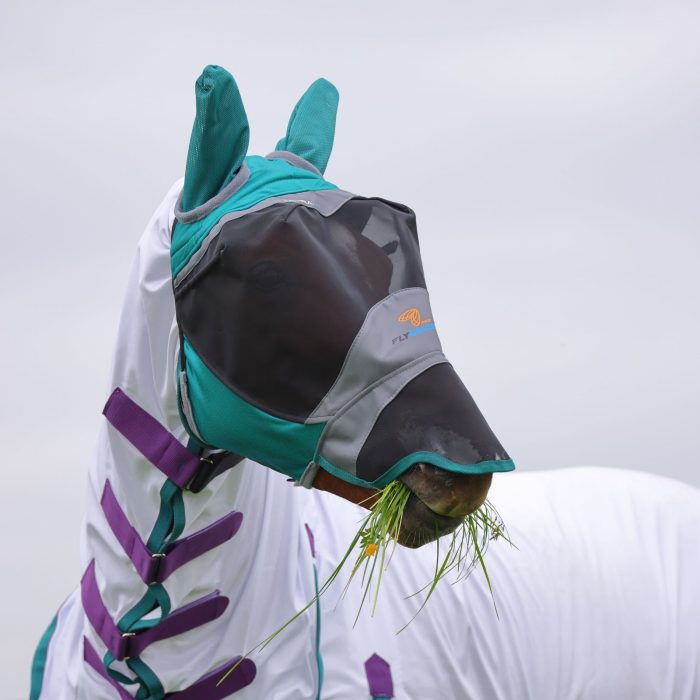
Quick Comparison: Mesh vs. Lycra
| Feature | Mesh Fly Masks | Lycra (Stretch) Masks |
| We Recommend | Shires Fine Mesh Fly Mask offers full ear and nose coverage, ideal for preventing sunburn, and features fleece padding for supreme comfort. | LeMieux Bug Relief Full Fly Mask provides 75% UV protection and prevents flies from getting into the mask with its “second skin” fit. |
| Best For | High fly pressure & UV protection | Sensitive horses & “escape artists” |
| Visibility | Excellent (structured away from the eye) | Good (form-fitting) |
| UV Protection | High (often 70%+) | Moderate (often 30–50%) |
| Durability | Rugged & tear-resistant | Soft & comfortable |
Frequently Asked Questions (FAQs)
Can you ride a horse in a fly mask?
Yes, but not in a standard turnout mask. Turnout masks are made of stiff mesh that can interfere with the bridle and may slightly distort vision during high-speed work or jumping.
However, there are specific riding masks made with much finer, softer mesh designed to be worn over or under a bridle. These are game-changers for “headshakers” or horses that become distracted by bugs while working.
When should horses wear fly masks?
Horses should typically wear masks during daylight hours when flies and UV levels are at their peak. It is best to put the mask on in the morning before the flies become active and remove it when you bring them in for the evening.
Is it okay to leave fly masks on horses at night?
Generally, no. While it’s tempting to leave it on to save time, horses have excellent night vision that relies on picking up minimal light. A fly mask acts like sunglasses at night, significantly reducing their ability to navigate safely in the dark.
- The Exception: Only leave a mask on at night if specifically advised by a vet (e.g., for a horse recovering from an eye injury).
- Pro Tip: Removing the mask daily allows you to check for rubs, trapped debris, or any early signs of eye irritation.
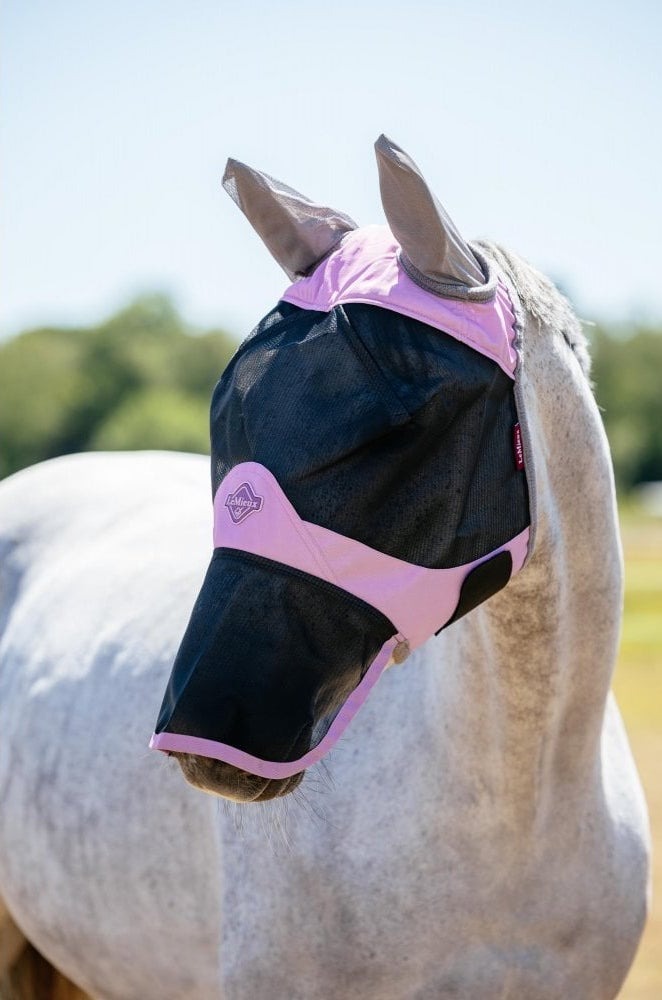
Top Tips for Maintaining Visibility
A fly mask is only effective if the horse can actually see through it! Dirt, dried mud, and pollen can quickly clog the mesh.
- The Two-Finger Rule: Always ensure there is at least a two-finger gap between the mesh and your horse’s eyelashes. Brands like Shires often include darts (stitched folds) to keep the fabric arched safely away from the eye.
- Daily Rinse: If the mask is dusty, give it a quick flick or a rinse with a hose.
- Deep Clean: Once a week, wash the mask in a bucket of cool water with a mild, non-irritating soap. Always air dry; high heat from a dryer can warp the mesh and ruin the fit.
Fly Masks at Oakfield Saddlery
At Oakfield Saddlery, we believe a comfortable horse is a happy horse. Now that you know exactly how fly masks work to protect your horse’s vision and skin, it’s time to find the perfect fit for the sunny season ahead. Whether you need a heavy-duty UV blocker for a sensitive Thoroughbred or a soft Lycra mask for a pony who hates traditional mesh, our expert team is here to help you choose from top-tier brands like LeMieux and Shires. At our Lancashire superstore, we often hear from concerned walkers or new owners worried about flies ruining their ride or their horse’s turnout. Allow our expert team to assist you with any questions, and explore our full collection online today for premium fly mask protection.
Read Next
Mastering the Moult: How to Manage the Spring Coat Shed
Spring Grass Success: The Ultimate Guide to Horse Supplements & Health
Turnout Rugs vs. Stable Rugs: The Ultimate Guide for Horse Owners

Comments are closed here.