
Turnout Rugs vs. Stable Rugs: The Ultimate Guide for Horse Owners
You’ve reached a pivotal moment in horse ownership: understanding the essential difference between turnout rugs and stable rugs. To the untrained eye, they both look like “horse coats,” and it’s easy to wonder, “Can’t I just buy one for everything?” However, the materials and design of these two rug types are fundamentally different. Choosing the wrong one isn’t just a waste of money; it can seriously impact your horse’s comfort, health, and hygiene.
The purpose of this guide is to eliminate confusion. We’ll break down the key differences using objective criteria such as material performance, use case, core features, and cost so that you can shop with confidence.
The Quick Verdict (And Why You Need to Keep Reading)
Neither rug is universally “better”—they are designed for completely different environments. The turnout rug is your horse’s all-weather, durable shell for the field. The stable rug is your horse’s breathable, insulating duvet for the barn. You will need both.
Table of Contents
Individual Product Overview
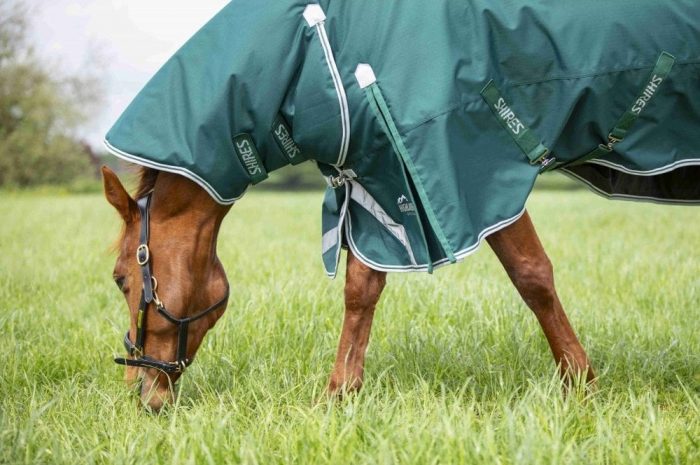
Turnout Rugs: The All-Weather Armour
Turnout rugs are the workhorses of the wardrobe, specifically engineered to withstand the rigours of outdoor life. Their core strength is their robust construction and weather resistance. The outer shell (often measured in denier, like the durable Asker options) is typically waterproof, windproof, and tear-resistant. They are designed to manage rain, mud, and harsh winds while remaining breathable enough to prevent the horse from sweating profusely underneath. If your horse lives out or spends the day in the field, this is the essential layer of protection you need.
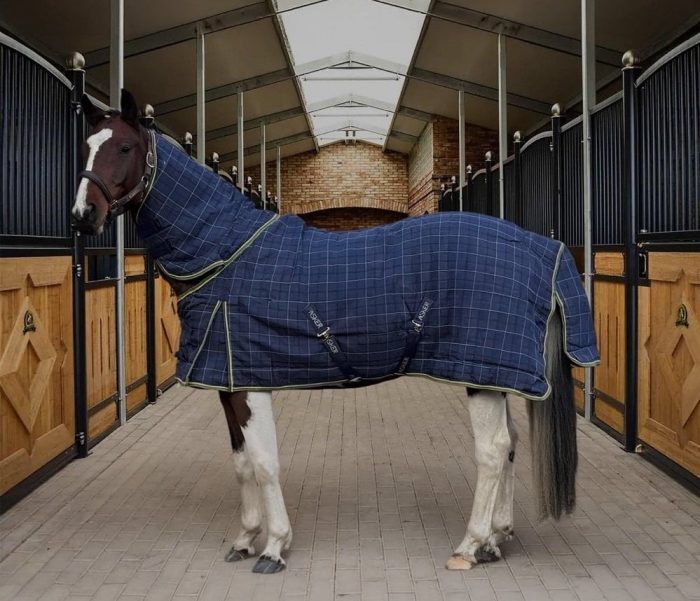
Stable Rugs: The Insulating Duvet
Stable rugs are the comfortable, indoor equivalents of a jacket. They are designed to be worn when your horse is inside a stable or barn. Their primary function is insulation and warmth, achieved using soft, breathable materials and varying levels of ‘fill’ (measured in grams, e.g., 100g, 200g, 350g). Unlike turnout rugs, they are not waterproof—the outer material is usually cotton, polyester, or fleece, which is comfortable but would absorb water like a sponge if worn outside. This breathability is key to preventing overheating and maintaining a healthy coat while stabled.
The Head-to-Head Breakdown
Comparison Point 1: Waterproofing & Durability
| Feature | Turnout Rug (The Field) | Stable Rug (The Home) |
| Primary Goal | Protection from elements, durability. | Insulation and comfort. |
| Waterproof? | Yes, manufactured using a waterproof fabric. | No, designed for dry, indoor use only. |
| Outer Fabric | High denier (e.g., 600D, 1200D), tough, and tear-resistant. | Lower denier, soft, and breathable (e.g., cotton or fleece). |
The Analysis: This is the most critical difference. A turnout rug, like those by Asker or Shires, is a shell designed to repel water. Its construction involves technical, synthetic outer materials (measured in denier, representing thread thickness and strength) and taped seams to ensure a watertight barrier.
A stable rug offers zero protection against rain. If a stable rug gets wet, it will become heavy, cold, and clingy, potentially causing the horse to become dangerously chilled. Turnout rugs are superior for any wet or dirty condition.
Comparison Point 2: Breathability and Warmth Control
The Analysis: While turnout rugs offer some breathability to allow sweat vapour to escape, they are primarily designed for weather protection. Stable rugs, on the other hand, prioritise maximum breathability. Made from materials that allow air to circulate, they are excellent at keeping a horse warm without causing them to “cook” or sweat in the stable.
For a clipped horse, both types will be required, but you’ll need to focus on the ‘gram fill’ to regulate warmth. A high-fill stable rug (350g) in a cold barn will keep your horse cosy, while a medium-fill turnout rug (200g) is suitable for a damp, windy day outside. Stable rugs are generally superior for regulating internal temperature and maintaining hygiene.
Comparison Point 3: Cost, Care, and Layering
The Analysis: Turnout rugs are generally more expensive due to the technical, durable, and waterproof fabrics required. However, the lifespan is often excellent, making the initial investment worthwhile. Stable rugs are often easier to wash and dry at home (unless they have a very heavy fill).
A key strategy in winter is layering: a lightweight stable rug can be worn under a turnout rug to add extra warmth outside—but you must ensure the turnout rug is completely waterproof and the combined weight is not too heavy for your horse. Layering is a versatile way to adapt to changing weather conditions without buying multiple heavyweight rugs.
Detailed Comparison Table
| Feature | Turnout Rug | Stable Rug |
| Primary Use | Field, Paddock, Transport in wet weather. | Stable, Barn, Transport in dry weather. |
| Key Function | Waterproofing, Wind Resistance, Durability. | Insulation, Warmth, Breathability. |
| Waterproof? | Yes (Essential feature). | No (Will absorb water). |
| Denier Range | High (e.g., 600D to 1680D) for tear resistance. | Lower, less focused on ruggedness. |
| Warmth (Fill) | Available in Light (0g), Medium (100-200g), Heavy (300g+). | Available in Light (0g) to Very Heavy (450g+). |
| Coat/Skin | Protects the coat from harsh weather. | Keeps the coat smooth and clean while the horse is stabled. |
| Cleaning | Requires specialist washing to maintain waterproofing. | Often machine washable (depending on fill). |
| Brands | Asker, Shires, Weatherbeeta | LeMieux, Asker, Saxon |
The Final Verdict: Who Should Buy Which?
Understanding your horse’s routine is key. The simplest answer is: you need one of each to cover all eventualities.
Recommendation 1: Buy a Turnout Rug If…
- Your horse spends any significant time in the field (even just a few hours a day).
- You live in a region with unpredictable or heavy rainfall.
- You need a rug that can be layered over a stable rug for ultimate flexibility in cold, wet conditions.
Recommendation 2: Buy a Stable Rug If…
- Your horse is clipped and requires non-waterproof insulation while stabled.
- You need a hygienic, breathable layer that can be changed and washed easily to keep your horse’s coat clean and shiny.
- You are looking for a cost-effective layer to use under a turnout rug or for overnight warmth in a dry barn.
Top 5 Stable Rugs at Oakfield Saddlery
| Rug Name | Weight/Fill | Key Features |
| Weatherbeeta Comfitec PP Channel Quilt II Combo Neck Heavy | Heavyweight (360g) | Warmest option, 600D outer, Memory Foam Wither Relief Pad, Ezi-clip front closure, Integrated neck. |
| Weatherbeeta Comfitec 1000D Diamond Quilt Detach-A-Neck Heavy | Heavyweight (350g) | Most Durable (1000D outer), Quick clip front closure, Detachable Neck for versatility. |
| Weatherbeeta Comfitec 210D Channel Quilt Combo Neck Medium | Medium Weight (250g) | Warmer side of medium, 210D outer, Integrated neck. |
| Shires Tempest Original 200 Combo Stable Rug | Medium Weight (200g) | Good standard, medium weight; 600D outer for durability; breathable; integrated neck cover. |
| Shires Tempest Original 100 Stable Combo Rug | Lightweight (100g) | Ideal for layering, 210D outer, Tail flap. |
Top 5 Turnout Rugs at Oakfield Saddlery
| Rug Name | Weight/Fill | Key Features |
| Shires Highlander Original 300 Combo Turnout Rug | Heavyweight (300g) | Best for Deep Cold. Excellent waterproofing to 3000mm, breathable, and features a combined neck cover for maximum warmth. |
| Asker 300g Horse Combo Neck Turnout Rug | Heavyweight (300g) | High Warmth Value. Good 300g filling with 600D outer for cold, wet weather. |
| Asker 200g Horse Standard Neck Turnout Rug | Medium Weight (200g) | All-Round Medium Warmth. Standard everyday medium rug with 600D durability and elasticated leg straps. |
| Saxon Defiant 600D Standard Neck Medium Turnout Rug | Medium Weight (200g) | Great Value Medium. Solid 600D outer and 200g fill for general cool weather; features an adjustable tail cord. |
| Asker 0g Horse Lightweight Standard Neck Turnout Rug | Lightweight (0g) | Rain Sheet/Mild Weather. No filling, ideal for keeping a horse dry without adding heat; 600D outer for decent durability. |
Frequently Asked Questions (FAQs)
Can you layer a stable rug under a turnout rug, and when is that recommended?
Yes, layering a stable rug under a turnout rug is highly recommended and an effective way to manage your horse’s warmth.
- When to Layer: This practice is best used during extremely cold weather, particularly overnight, or when you need to adjust the warmth level for a clipped horse quickly.
- The Benefit: It provides exceptional flexibility. Instead of buying multiple heavy turnout rugs, you can use a single waterproof turnout shell (e.g., a Weatherbeeta or Asker Turnout) over a lightweight or medium-fill stable rug (e.g., a LeMieux stable rug). This allows you to increase warmth without losing the essential waterproof protection provided by the turnout rug.
- Important Safety Note: Always ensure the turnout rug is the correct size to accommodate the stable rug underneath without causing pressure points or rubbing. The outer rug must be 100% waterproof, as a damp stable rug will draw heat away from your horse, making them colder.
For a beginner horse owner: Should I buy a turnout rug or a stable rug first?
As a beginner, you should prioritise the rug that protects your horse from the outside environment.
- You should buy a Turnout Rug first.
- Justification: A turnout rug is essential for protecting your horse from rain, wind, and cold when they are outside, which they will be every day, even if only briefly. If a horse gets soaked through, it can quickly lead to chilling and discomfort. Even a horse stabled overnight will require a turnout rug for field time.
- The Follow-Up: A stable rug should be your second purchase, especially if your horse is clipped or if your barn is cold.
My horse lives mostly in a field—do I need a turnout rug or is a stable rug enough?
You absolutely need a turnout rug. A stable rug is not sufficient and should never be used in a field.
- Turnout Rug is Essential: If your horse is turned out for any period, they need a rug with a waterproof and durable outer shell (high denier) to withstand the elements and minor knocks. Brands like Aubrion and Weatherbeeta offer reliable turnout options.
- The Danger of Stable Rugs Outside: Stable rugs are made from breathable, absorbent materials. If a stable rug is worn outside, it will act like a giant sponge, soaking up rain and moisture. This creates a heavy, cold, wet layer against your horse’s skin, significantly increasing the risk of chilling, skin issues, and discomfort.
Cost comparison: Are turnout rugs generally more expensive than stable rugs, and is the extra cost worth it?
Yes, turnout rugs are generally more expensive than stable rugs, and the extra cost is absolutely worth it.
- Cost Difference: Turnout rugs require more technical, durable materials, including high-denier fabrics, waterproof membranes, and taped seams to ensure they remain watertight. This engineering and material quality leads to higher manufacturing costs. Stable rugs, while still high-quality, use simpler, softer, breathable fabrics.
- Value and Worth: The higher cost of a turnout rug is a worthwhile investment because:
- Protection: It provides essential, non-negotiable protection against the elements.
- Durability: High-quality turnout rugs are built to last several seasons, even with daily use in muddy, rugged conditions.
- Safety: The superior protection prevents health issues that can arise from a horse getting cold and wet.
Shop Turnout and Stable Rugs from Oakfield
Don’t be afraid to ask for help! The difference between a turnout and a stable rug is crucial for your horse’s well-being. By selecting the right rug for the right environment, you ensure your horse is warm, dry, and happy, whether they are a “happy hacker” or a top-tier competition animal.
Next Steps
- Shop All Turnout Rugs by Asker, Weatherbeeta, and More
- Shop All Stable Rugs & Layers from Asker, Shires & Others

Comments are closed here.