
Horse Rug Guide: Everything You Need to Know About Horse Rugs
At Oakfield Saddlery, we understand that choosing the right rug for your horse can feel like a complex puzzle. As a family business serving the equestrian community since 1988, our mission is to provide you with the friendly, knowledgeable advice you can trust.
Horse rugs can be confusing, from temperatures to weights and everything in between. Follow this guide to learn everything you need to know about horse rugging and keeping your horse warm, healthy, and safe.
TL;DR: Key Takeaways
- Don’t Over-Rug! A healthy, unclipped horse is generally comfortable down to 0°C, and over-rugging is more likely to cause health issues than under-rugging. When in doubt, go lighter.
- Deciding Factors: Rugging depends on a combination of factors: Temperature, Clipping status, Stabling (stable vs. field), Body Condition (age, fat reserves, breed), and Weather (wind chill and wetness).
- The Jargon Decoder:
Fill (Weight): Measured in grams (g) (0g to 400g+). This is the warmth—think of it like your duvet’s tog rating.
Denier (D): Measured in D (600D to 1680D). This is the outer fabric’s strength and durability. - Must-Have Wardrobe: A core selection of 4-5 rugs (lightweight/no-fill turnout, medium turnout, fleece/cooler, medium stable) is usually sufficient, with liners adding flexible warmth.
Table of Contents
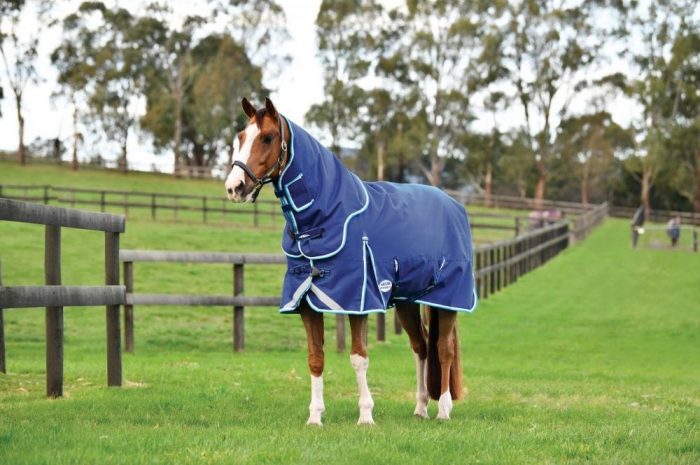
When does my horse need rugging?
Before thinking about rugs, it’s important to remember not to rug your horse based on how cold you feel. Horses are masters of temperature regulation. Their thermoneutral zone—the range of temperatures at which they don’t need to expend extra energy to keep warm or cool—is typically between 5°C and 25°C. They are far more tolerant of the cold than humans. A healthy, unclipped horse will generally not feel the cold until the temperature drops below 0°C. That being said, there is plenty to consider when putting a rug on your horse.
First, consider if and when your horse needs a rug. Many unclipped horses use their coat and possible fat reserves to keep warm and dry. Their coats can adapt to changing temperatures by standing their hairs on end to create an insulating layer. Their fur can also move to create a ‘V’ pattern, allowing rain to run off easily.
This mechanism is compromised when a horse wears a rug or has its hair clipped off, so extra care must be taken with clipped horses.
The Danger of Over-Rugging: Applying a rug that is too heavy prevents your horse from cooling down naturally. This can lead to sweating, skin issues, discomfort, and, in extreme cases, conditions such as colic or hives.
Decoding the Jargon: Denier and Polyfill
Choosing a rug means understanding these two key terms: Fill Weight and Denier.
| Term | Measurement | What it Means (Simply) | Real-World Scenario |
| Fill / Weight | Grams (g) (e.g., 0g, 100g, 300g) | The warmth of the rug. This is the weight of the Polyfill (polyester insulation) inside. The higher the number, the warmer it is. | 0g: Rain sheet/Mac for a summer shower or mild day. 300g: Your thickest winter duvet for a fully clipped horse in freezing conditions. |
| Denier | D (e.g., 600D, 1200D, 1680D) | The strength/toughness of the outer fabric. It refers to the weight and thickness of the thread weave. The higher the number, the more durable. | 600D: Good for stable rugs or calm horses in turnout. 1200D Essential for “rug wreckers” or horses turned out in a herd to prevent rips. |
What weight rug to put on my horse?
To simplify your choice, use our guide below as a starting point. Remember to check your horse regularly by feeling under the rug at the side of the wither or behind the front legs.
- Warm/Damp: Horse is too warm (reduce weight).
- Cold/Shivering: Horse is too cold (increase weight).
- Comfortable/Dry: Just right!
| Temperature Range | Turned Out (Unclipped) | Turned Out (Clipped) | Stabled (Unclipped) | Stabled (Clipped) |
| 15°C+ | No Rug / Fly Sheet | No Rug / Fly Sheet | No Rug / Summer Sheet | Lightweight Stable Sheet (0g) |
| 10°C – 15°C | No Rug / 0g | Lightweight Turnout (50g – 100g) | No Rug | Lightweight Stable (50g – 100g) |
| 5°C – 10°C | 0g – 100g Turnout | Mediumweight Turnout (150g – 200g) | Lightweight Stable (100g) | Medium Stable (200g) |
| 0°C – 4°C | 100g – 150g Turnout | Medium/Heavy Turnout (250g – 300g) | Medium Stable (200g) | Heavy Stable (300g+) |
| Below 0°C | 200g – 300g Turnout | Heavy Turnout (350g+) often with Liner | Medium/Heavy Stable (250g – 300g) | Heavy Stable (350g+) with Liner |
Semantic Difference: Turnout vs. Stable Rugs
- Turnout Rugs: Designed for outdoor use. They have a waterproof and breathable outer layer (high Denier).
- Stable Rugs: Designed for indoor use. They are warm and breathable but NOT waterproof (lower Denier). They can be used as a layer under a turnout rug for extra warmth.
How many rugs does a horse need?
With so many different rug types and weights for various weather conditions and temperatures, your horse may soon have a bigger wardrobe than you!
Many considerations are made when choosing horse rugs, including whether your horse is stabled, the season, whether the rug is likely to get muddy and wet, how long it might take to dry, and so on.
To cover all bases, we recommend the following wardrobe:
| Rug Type | Weight/Fill | Key Use |
| Lightweight/No-Fill Turnout | 0g – 100g | Rain sheet, mild days, or as a shell over a liner. |
| Medium-Weight Turnout | 200g – 250g | All-weather, core winter rug for an unclipped horse. |
| Medium-Weight Stable Rug | 200g – 250g | Primary stable warmth, or for layering under a turnout. |
| Fleece / Cooler Rug | N/A (Wicking Fabric) | Post-exercise, dry off slowly to prevent chilling. |
| A Vest/Hood | N/A | Use these to add extra protection alongside your turnout or stable rug on very cold days. |
Neck Types
Choosing the right fit is crucial to prevent rubbing and ensure comfort. A poorly fitting rug can cause injuries.
- Standard Neck: Stops at the wither, good for warmer weather/unclipped horses.
- Combo Neck (Fixed): Neck cover is permanently attached for maximum coverage and warmth.
- Detach-A-Neck (Detachable): Offers the best versatility—add the neck cover in cold/wet weather, remove it in milder conditions.
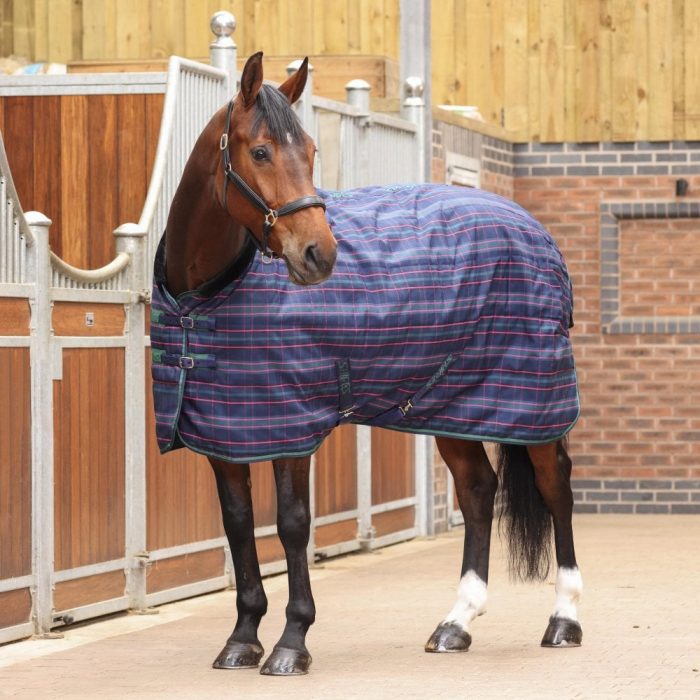
How to measure a horse for a rug
Measure the horse:
This is the most accurate way to find the best rug size. Ideally, use a tape measure; if you don’t have one long enough, use a piece of twine and measure it afterwards. You might find it easier to have someone help you measure.
Begin measuring from the centre of your horse’s chest, then continue in a straight line around the shoulder and along the side of their stomach until you reach the furthest rear point of the rump.
Measure an existing, well-fitting rug:
Measuring a rug you already have is easier; however, we recommend measuring both your horse and the rug to get the most accurate measurement.
Simply lay your rug flat and measure from the centre of the chest to the end of the rug. Avoid using a rug that overlaps at the front, like some turnout rugs, as this complicates the measurement.
Horse rug measurements
Now that you have your measurements, it’s time to pick the right rug size. Horse rugs are sized in feet and inches, with 3-inch increments.
If your horse is between sizes, we recommend sizing up rather than down unless your horse is especially narrow-chested. Your horse’s build should also be considered when choosing a rug size. A very broad horse may need a bigger size, whereas a horse with a more petite build may need a smaller size.
Horse rug size chart
| Length | Height | Rug Size | |
| Centimetres | Inches | Hands | Feet and inches |
| 100 | 39 | <10 | 3 ft 3 |
| 105 | 42 | <10 | 3 ft 6 |
| 115 | 48 | <10 | 3 ft 9 |
| 120 | 48 | 10 – 10.2 | 4 ft |
| 130 | 51 | 10.2 – 11 | 4 ft 3 |
| 140 | 54 | 11 – 11.2 | 4 ft 6 |
| 145 | 57 | 11.2 – 12.2 | 4 ft 9 |
| 150 | 60 | 12.2 – 13.2 | 5 ft |
| 160 | 63 | 13.2 – 14 | 5 ft 3 |
| 170 | 66 | 14 – 14.2 | 5 ft 6 |
| 175 | 69 | 14.2 – 15.2 | 5 ft 9 |
| 180 | 72 | 15.2 – 16 | 6 ft |
| 190 | 75 | 16 – 16.2 | 6 ft 3 |
| 200 | 78 | 16.2 – 16.3 | 6 ft 6 |
| 205 | 81 | 16.3 – 17 | 6 ft 9 |
| 210 | 83 | 17 – 17.2 | 7 ft |
| 220 | 87 | 17.2 – 18 | 7 ft 3 |
| 230 | 90 | > 18 | 7 ft 6 |
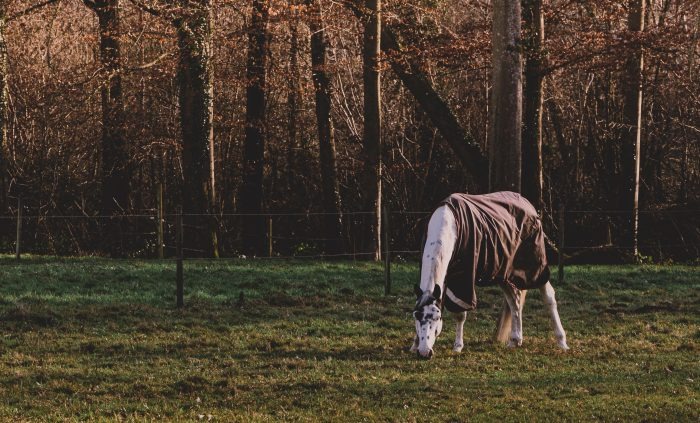
How to check my horse’s temperature?
For a guide to a horse’s temperature, check by feeling under their front legs or at the base of the ears; a reliable test is to feel at the side of the wither if wearing a rug. If the horse feels cold to the touch, you could add another rug; if it’s hot and damp, the horse is probably too warm. If you are concerned about the horse’s health, you can check the core body temperature with a thermometer – it should be 38°C, but each horse is different, so get to know your horse’s vitals.
What temperature should I put a rug on my horse?
A horse feels cold when the temperature is below 0°C and warm when it reaches 25°C. The temperature range between these numbers is the horse’s thermoneutral zone. Unless clipped and living outside 24/7, most horses will not need rugging until temperatures drop to 5-10°C. Rug older, younger, thinner, or clipped horses sooner, and check your horse to ensure it is comfortable in your chosen rug.
Signs of heat stress (Overheating)
Overheating is a serious risk. Check your horse multiple times a day. If you see any of these signs, remove the rug immediately and cool your horse down gradually.
- Loss of appetite
- Restless or colic-like symptoms
- Rapid heart and breathing rate
- Lethargy or severe dehydration
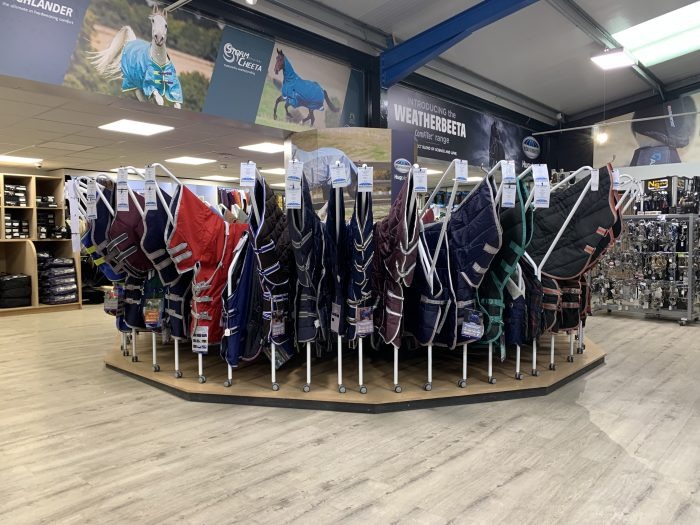
We stock all the top rug brands you trust, including Shires, LeMieux, and our exclusive Asker horse rugs available only at Oakfield Saddlery. Our knowledgeable staff receive specialist training in rug and safety fitting, so whether you visit our superstore or shop online, we’re here to help you make the best choice.
Confidence in your decisions comes from knowing your horse. We hope this guide helps you feel confident in rugging your horse appropriately for any weather.
With the British weather constantly changing, you need to be prepared. We hope our guide on horse rugging has helped you establish when your horse needs a rug, what weight the rug should be, how you check your horse’s temperature and how to stop signs of heat stress. Knowing your horse will make you feel more confident in your decisions and help you avoid over-rugging. Discover our full collection of horse rugs and our range of horse care products and supplements to provide the best care for your horse.
Read next
How to survive this winter with your horses

Comments are closed here.