
Taking the Reins: Our Comprehensive Horse Bridle Guide
Choosing the correct horse bridle is vital for ensuring your horse’s comfort, safety and ability to communicate effectively. There are many types of bridles to choose from, and the best one for your horse will depend on the discipline and your riding style.
This guide will take you through all the main types of bridles and how they differ, allowing you to choose the best option for your companion.
Table of contents:
What do cheek pieces do for a horse?
How to put a horse bridle together

Shires Lusso Dressage Flash Bridle at Oakfield
What is a horse bridle?
A horse bridle is essential for communicating with your horse whilst riding. It’s a series of leather straps on a horse’s head, and reins are attached so the rider can direct the horse’s movements. It’s one of the key forms of communication between rider and horse, so choosing the correct bridle is vital.
How does a horse bridle work?
The bridle takes advantage of the horse’s instinct to move away from the discomfort of pressure. The bit, headpiece, and reins work together to create pressure and a means of communicating with the horse.
Depending on what kind of bit you use, it will apply pressure to different points in the horse’s mouth: the roof, the tongue, or the corners. Remember that the bit is only meant to create pressure, not pain, so choosing the right bit is important.
The headpiece holds the bit in place, which can also apply pressure to the horse’s cheeks, chin, or nose.
The reins connect to the headpiece. When a rider pulls on the reins, it pulls the horse’s head in that direction and signals them to turn. For example, pulling on the left rein directs the horse’s head to the left, and they will veer in that direction. When a rider pulls on both reins simultaneously, it signals the horse to slow down and come to a stop.
Although the bridle effectively communicates with your horse, it should be used with the rider’s legs and voice commands.

Parts of a horse bridle
A bridle is made up of the following parts:
| Bridle part | Purpose |
| Headpiece/crownpiece | The top section of the bridle. It sits behind the horse’s ears and holds the bridle in place. |
| Browband | This integral component sits above the horse’s eyes, below the ears. It prevents the bridle from sliding backwards on the horse’s head. |
| Throatlatch | This strap runs from the horse’s ears, across their jaw, and under the throat to keep the bridle in place. The throatlatch should not be too tight. Otherwise, it will restrict your horse’s breathing. |
| Cheek pieces | These straps run down the side of the bridle to connect the headpiece to the bit. Cheek pieces are vital for communication and can be adjusted to ensure comfort for your companion. |
| Noseband | As you’d imagine, this sits across the horse’s nose and prevents them from opening their mouth too wide to evade the bit. Different bridles have different types of nosebands, and they’re available in various shapes and sizes. The noseband tends to attach to the bridle via a separate head strap. |
| Bit | This is a bar usually made from metal or rubber. It sits inside the horse’s mouth between their teeth with two rings on either side of the mouth where the reins attach to the bridle. As mentioned above, the bit applies pressure inside the horse’s mouth to direct their movements. |
| Reins | Probably the most recognisable part of the bridle, the reins are long, thin pieces of leather that attach to the bit to communicate with the horse. |
What do cheek pieces do for a horse?
“Cheek piece” refers to different things depending on the equestrian discipline. Racehorse cheek pieces are a form of headgear that horses can wear for racing in the UK and Ireland; they are sometimes referred to as French blinkers. These cheek pieces partially obscure the peripheral vision of racehorses so they can’t see what is immediately behind them, allowing them to stay calm and concentrate on the course in front of them.
In other disciplines, the cheek pieces are straps that connect the headpiece to the bit. There are different types of cheek pieces, with common types including loose ring, eggbutt, D-ring, and full cheek.
How to put a horse bridle together
Now you’ve got all the pieces of your bridle; it’s time to put them together.
- Attach the browband to the headpiece.
Hold the headpiece, ensuring you have it the correct way around. The throatlatch should be towards the back so it goes underneath the cheeks. Feed the browband through the side of the headpiece. Check to ensure the browband is facing forward.
- Attach the noseband.
Also known as a Cavesson, the noseband is the next component to attach. Feed the noseband through the browband, pulling it through the other side to lay flush underneath the headpiece. Then, attach the noseband buckle on the sides.
- Attach the cheekpieces.
These thicker pieces of leather attach to the headpiece. Buckle the pieces on the headpiece and adjust them to fit your horse.
- Secure the bit to the cheek pieces.
Ensuring it’s the right way around, attach the cheekpiece to the ring of the bit and feed the bottom of the cheekpiece through its keepers and the hook, ensure the bit isn’t twisted and repeat the process on the other side.
- Attach the reins to the bit.
Ensuring the reins’ stitching is facing outwards, feed the rein through the keeper, then through the hook closure, checking the reins are not twisted before attaching them on the other side.

LeMieux Arika Grackle Bridle at Oakfield
Types of bridle
Countless types of bridles are available, but they can be categorised into two main groups: English and Western.
English bridles consist of single or snaffle bridles and double bridles. Single bridles have one bit and one set of reins. Double bridles have two bits and two sets of reins. The English snaffle bridle is the least complicated and best for new or inexperienced riders.
Anatomical
Designed with a horse’s anatomy in mind, anatomical bridles help prevent pressure on the facial nerves to ensure comfort for your companion. This allows your horse to relax and perform at their best.

Hunt
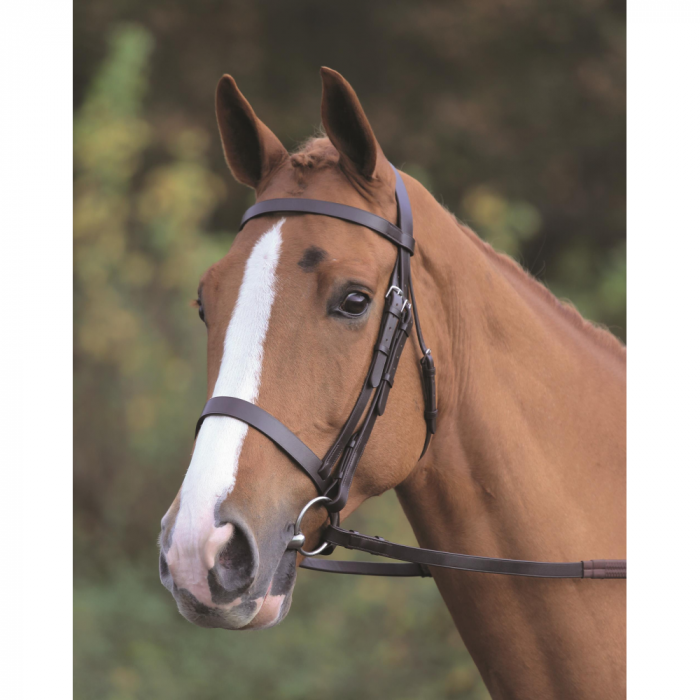
Hunt bridles offer a traditional look for the horse. With various styles to choose from, hunt bridles are often used for show jumping and show rings, thanks to their classic styling.
Grackle
Sometimes known as a figure 8 noseband, grackle bridles cross from the top of one cheek to the chin on the other side on both sides of the horse’s face to form a figure 8. Grackles apply even pressure over a larger area when the horse opens their mouth, preventing them from crossing their jaw to evade.
Named after the 1931 Grand National winner, Grakle, this bridle style is popular for racehorses as it relieves pressure from their incisors and premolars, allowing them to breathe more freely.


Flash
Flash bridles are great for training young horses. Supposedly developed to help King George III control his horse “Bold Flash” in the 19th century, the flash bridle prevents the bit from moving upwards in the horse’s mouth, which can prevent them from receiving directions. Instead, the flash encourages the horse to hold the bit in their mouth and gently chew it, producing saliva and keeping their mouth lubricated, making the bit more comfortable and increasing control for the rider.
Cavesson
Thanks to its neat, stylish appearance, the Cavesson bridle is sleek and adaptable, a popular choice for various disciplines. It is a bitless bridle, heavy, with a thick noseband. This bridle type is designed to keep the horse’s mouth and head stable and in the desired position. The Cavesson attaches around the horse’s nose or jaw at the bottom of the bridle.

Dressage
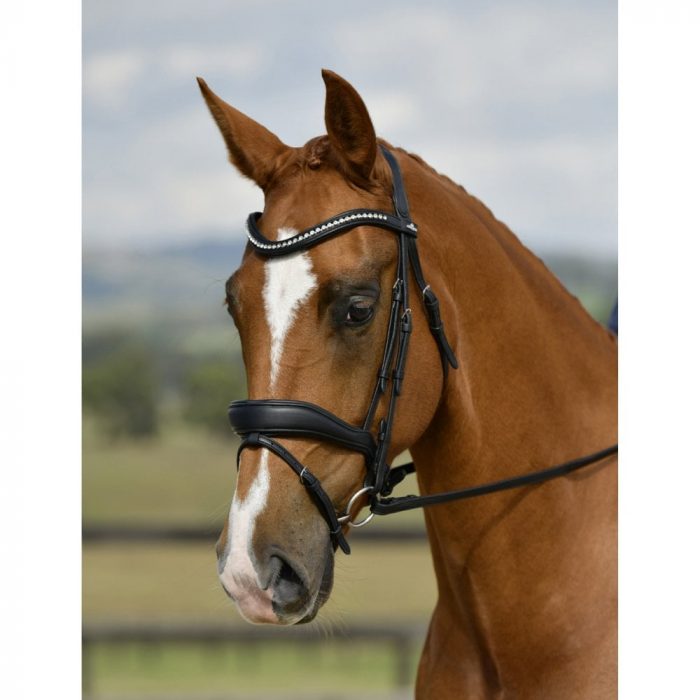
Dressage bridles with flash nosebands are traditionally black and padded for optimal comfort. These bridles are designed to have a neat, sleek look and often feature a standout browband to capture the judge’s attention in the ring.
Once you have chosen your bridle, read our measurement and fit guide to ensure the perfect fit for your horse.
Shop bridles, bridle parts and more at Oakfield
Now you’re ready to purchase, check out the bridle collection at Oakfield. With options from leading equestrian brands such as LeMieux and Collegiate, you can shop with confidence. We also have a brilliant range of bridle parts and accessories to discover in our extensive horse products collection.
Read more
Your complete guide to dressage dressing

Comments are closed here.